Introduction
Summary: James Rickards introduces the concept of “currency wars,” where nations engage in competitive devaluations of their currencies to gain economic advantages over others. He provides historical context and sets the stage for the analysis of modern currency conflicts.
Lesson: Understanding the historical precedents of currency wars helps in recognizing patterns and predicting future economic crises.
Chapter 1: Pre-War
Summary: The chapter explores the origins of currency wars, tracing back to the early 20th century. Rickards explains how currency manipulation was used as a tool during World War I and the Great Depression.
Lesson: Historical examples show that currency devaluation can lead to severe economic consequences, emphasizing the need for careful management of national currencies.
Chapter 2: Currency War I (1921-1936)
Summary: Rickards delves into the first significant currency war, which began after World War I. He discusses how countries like Germany, France, and the UK manipulated their currencies to stabilize their economies.
Lesson: Competitive devaluations can lead to a race to the bottom, where no country ultimately benefits, highlighting the destructive nature of currency wars.
Chapter 3: Currency War II (1967-1987)
Summary: This chapter covers the second major currency war during the Cold War era. The US dollar’s role as the world’s reserve currency is examined, along with the impact of the Bretton Woods system’s collapse.
Lesson: The dependence on a single currency as a global standard can create vulnerabilities and lead to significant economic disruptions when that currency is unstable.
Chapter 4: Currency War III (2010-Present)
Summary: Rickards analyzes the contemporary currency war, focusing on the aftermath of the 2008 financial crisis. He discusses how countries like China, the US, and the EU engage in currency manipulation to gain economic advantages.
Lesson: Modern currency wars are complex and involve sophisticated financial instruments, requiring nations to develop more advanced economic strategies.
Chapter 5: The G20 and the IMF
Summary: The role of international organizations like the G20 and the IMF in managing global currency stability is examined. Rickards discusses their effectiveness and limitations in preventing currency conflicts.
Lesson: International cooperation is crucial in managing global economic stability, but existing institutions often struggle to enforce rules and mediate conflicts effectively.
Chapter 6: The Dollar and the SDR
Summary: The chapter explores the Special Drawing Right (SDR) as a potential alternative to the US dollar as the world’s reserve currency. Rickards examines the pros and cons of adopting the SDR.
Lesson: Diversifying global reserve currencies could enhance economic stability, but transitioning to new systems requires careful planning and international consensus.
Chapter 7: The Rise of China
Summary: Rickards discusses China’s growing economic influence and its currency strategies. He analyzes how China positions the yuan to challenge the US dollar’s dominance.
Lesson: Emerging economies like China can significantly impact global financial systems, requiring established powers to adapt their strategies.
Chapter 8: Endgame: Paper, Gold, or Chaos?
Summary: The potential outcomes of ongoing currency wars are explored. Rickards presents scenarios where paper currency, gold, or economic chaos could prevail.
Lesson: Preparing for various economic scenarios is essential for policymakers, businesses, and individuals to mitigate risks associated with currency instability.
Chapter 9: The Misuse of Economics
Summary: Rickards criticizes the misuse of economic theories and models in managing currency policies. He argues that overreliance on flawed models can lead to poor decision-making.
Lesson: Critical evaluation of economic theories and models is necessary to develop sound currency policies and avoid unintended consequences.
Chapter 10: How to Win a Currency War
Summary: The final chapter offers strategies for nations to navigate and potentially win currency wars. Rickards emphasizes the importance of innovation, economic resilience, and strategic alliances.
Lesson: Nations must focus on building strong, diversified economies and fostering international cooperation to succeed in a world of competitive devaluations.
Conclusion
Summary: Rickards concludes by stressing the importance of understanding currency wars in the context of global economic stability. He calls for greater awareness and proactive measures to mitigate the risks associated with currency conflicts.
Lesson: Awareness and education about currency wars are vital for individuals, businesses, and policymakers to navigate the complexities of the global economy.
Buy This Book. Why not?
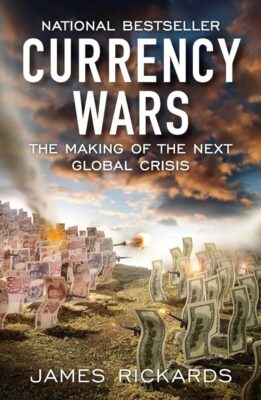
“Currency Wars: The Making of the Next Global Crisis” by James Rickards provides invaluable insights into the complex world of international finance and currency manipulation. Whether you are an investor, policymaker, or simply someone interested in global economics, this book offers crucial lessons and practical advice. Don’t miss out on understanding the forces shaping our economic future. Purchase your copy today and arm yourself with the knowledge to thrive in uncertain times.